← Software·Case study
Travelmaxing.
A free trip-planning app for DIY budget travelers: multi-stop itineraries cross-referenced with real cost-of-living, visa rules, and weather windows. No agency markup.
- Year
- 2025
- Role
- Solo build
- Stack
- Next.js · Mapbox · AI
- Links
- Live ↗
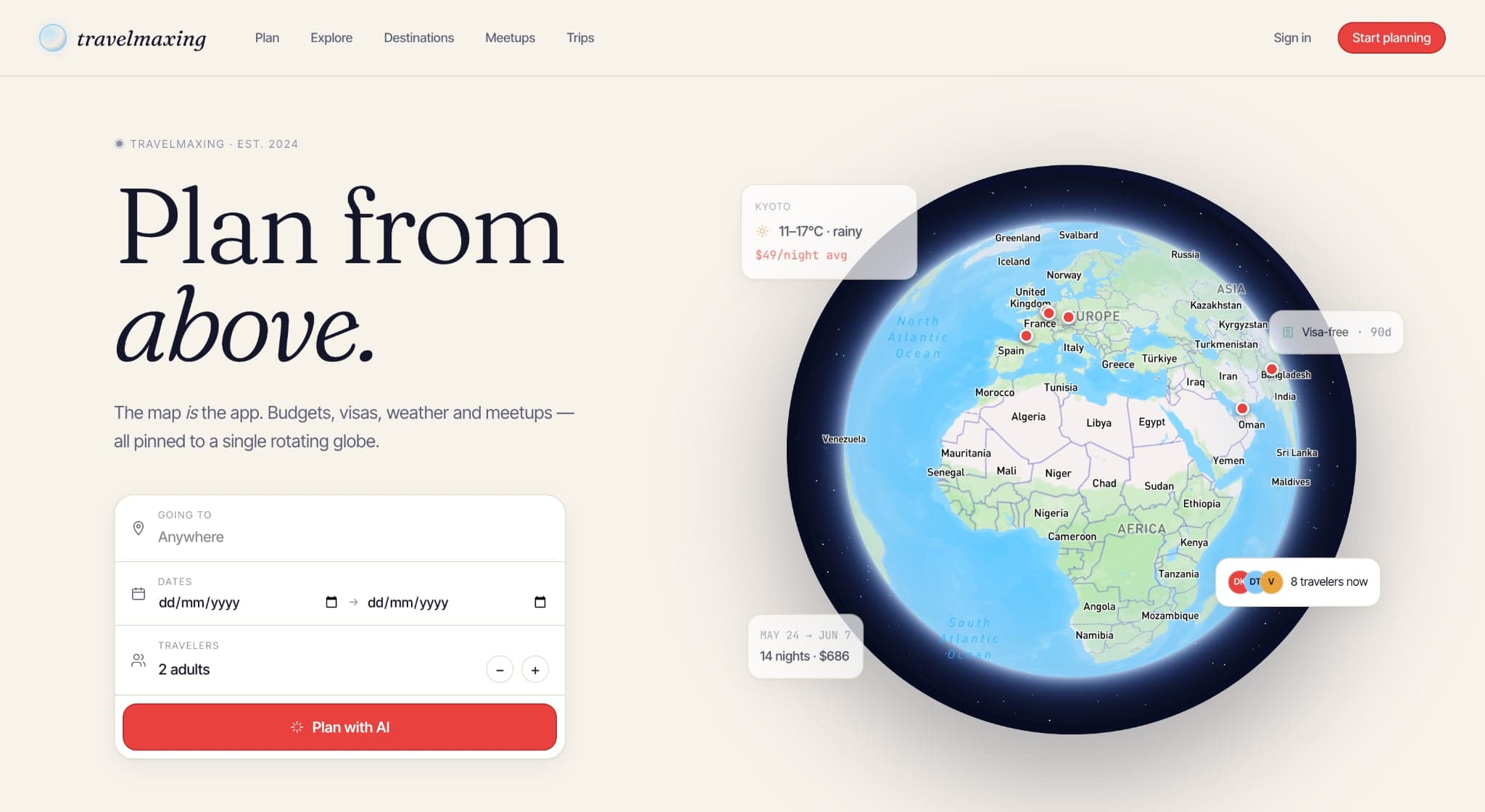
The brief. Replace the form-and-list pattern that defines every travel site with a single screen, a map, and lead with the budget constraint instead of the destination.
What it is
Travelmaxing is a free trip-planning app for DIY budget travelers. The usual flow on a booking site starts from a destination and discovers halfway through that it's out of budget. Travelmaxing inverts that: you start from your origin and your budget, and the globe colours by what you can actually afford.
"Travel maxxing" is a Gen-Z framing of an old idea: squeezing the most experiences, culture, and value out of every single trip. Same budget, more memories. Same time off, more countries.
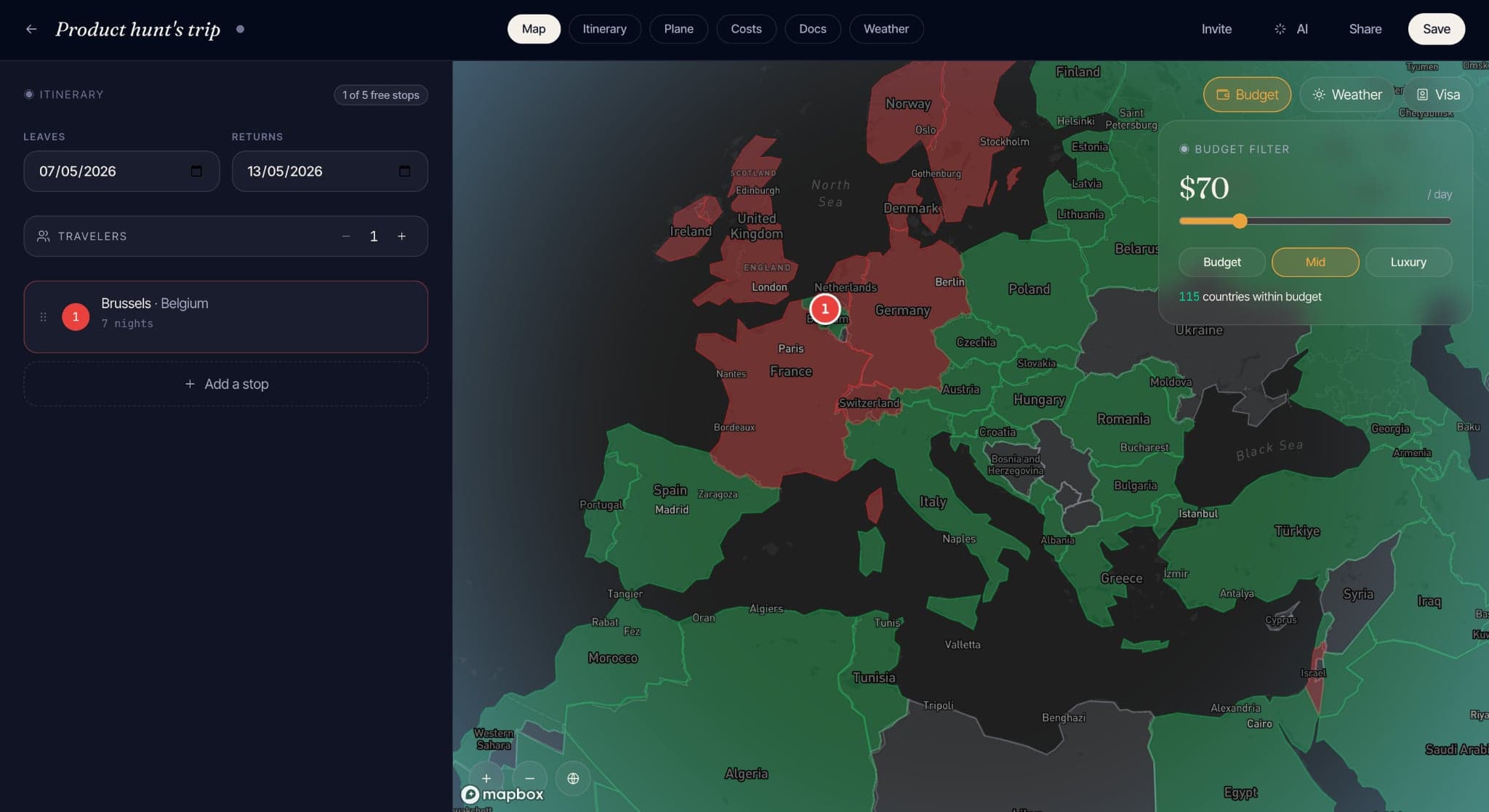
Travel budget first
Most travel sites assume you have a destination. Travelmaxing assumes you have a budget. Set a per-day number and an origin city; the map filters to the countries that fit and everything else falls away.
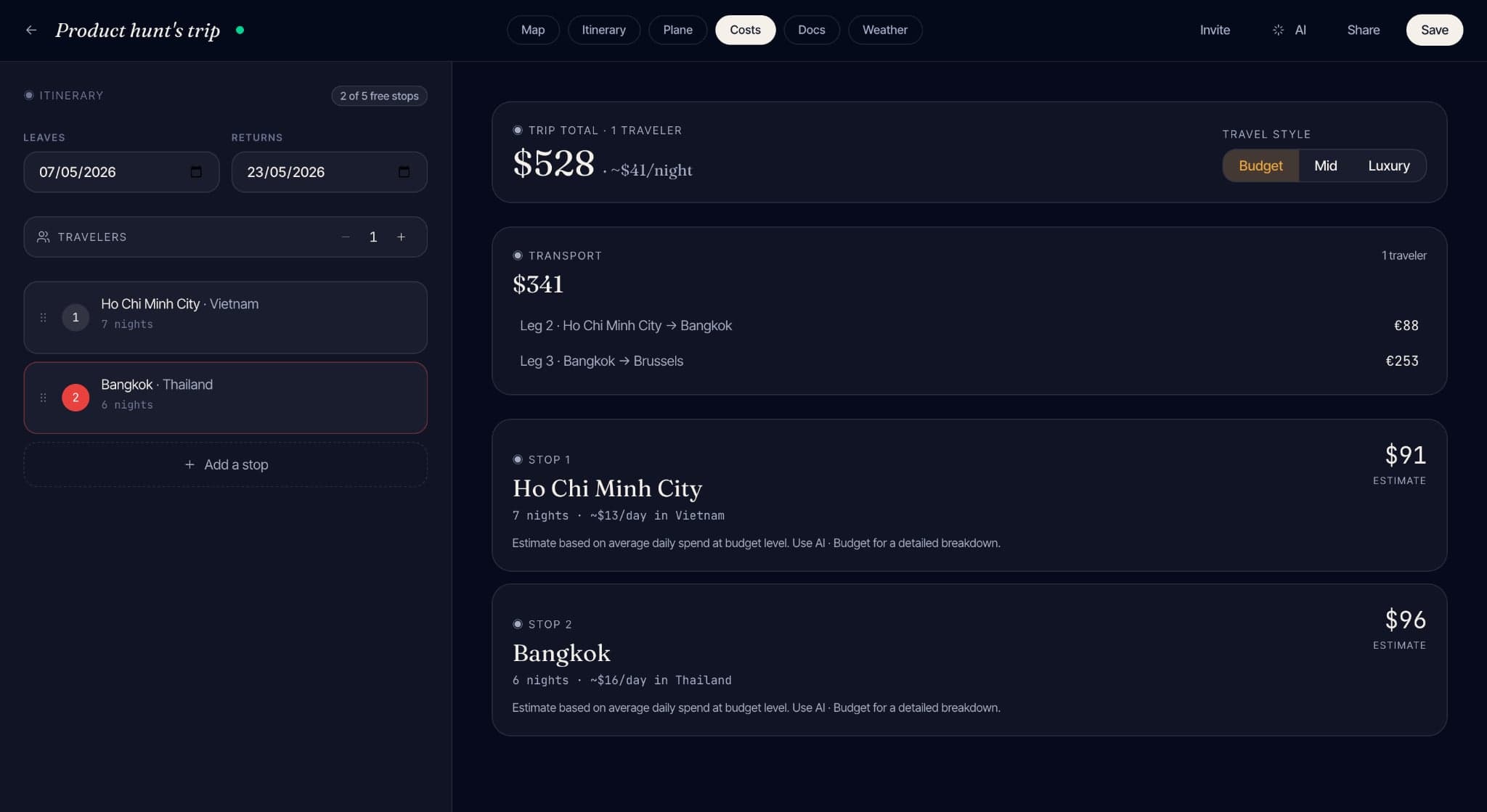
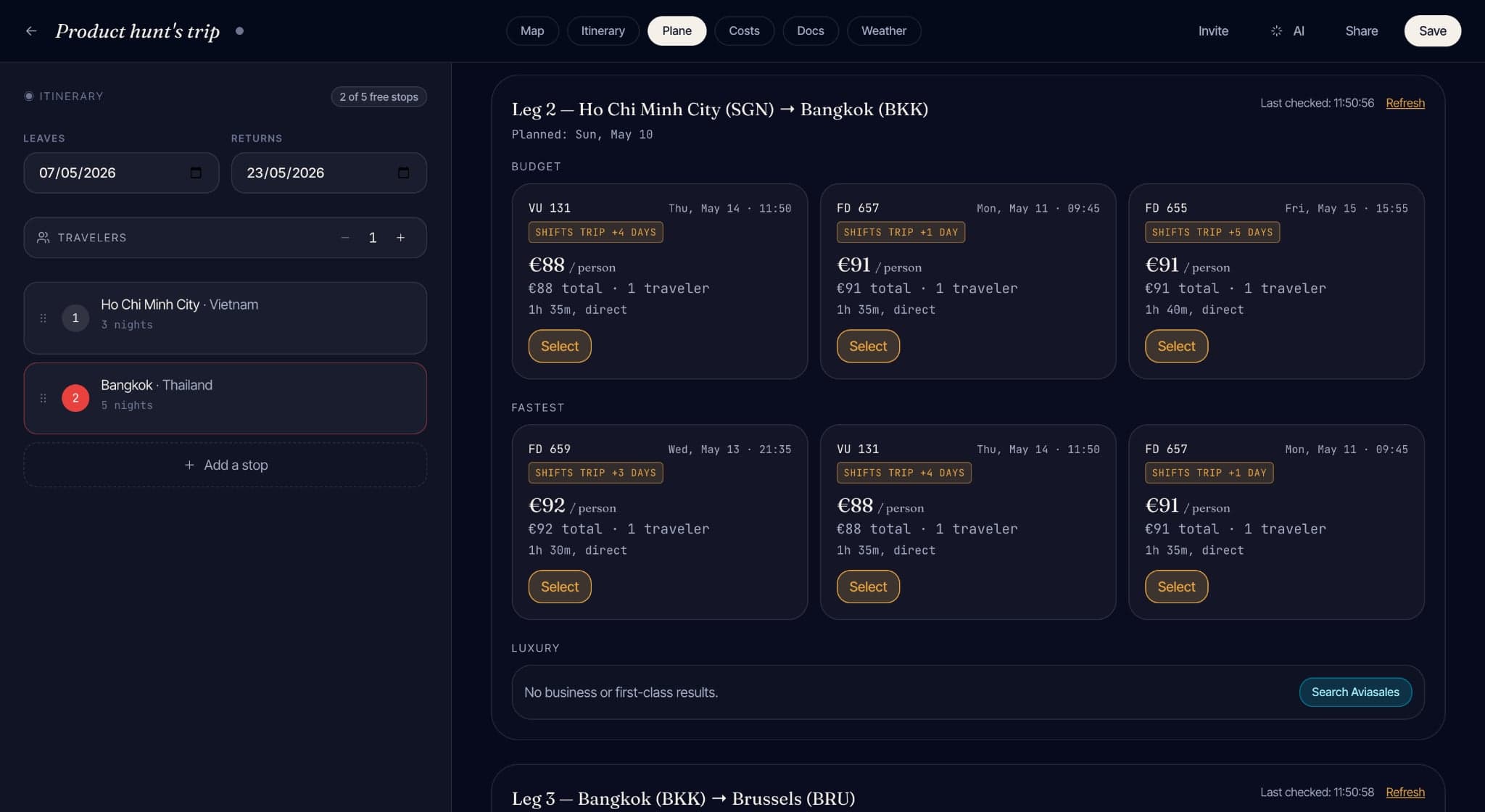
The cheapest combinations of flight + accommodation + cost-of-living surface automatically, with open-jaw routing that exposes hidden savings you'd never find on a standard search.
The four numbers every trip runs on
The app rests on four data layers, all surfaced on the same globe.
- Cost of living. real per-day costs for 199 countries, refreshed weekly.
- Visa rules. colour-coded by your passport, updated monthly.
- Weather windows. the best two-week travel window for any destination, computed from historical climate data.
- Meetups. opt-in, never noisy: travelers in the same city the same week as you.
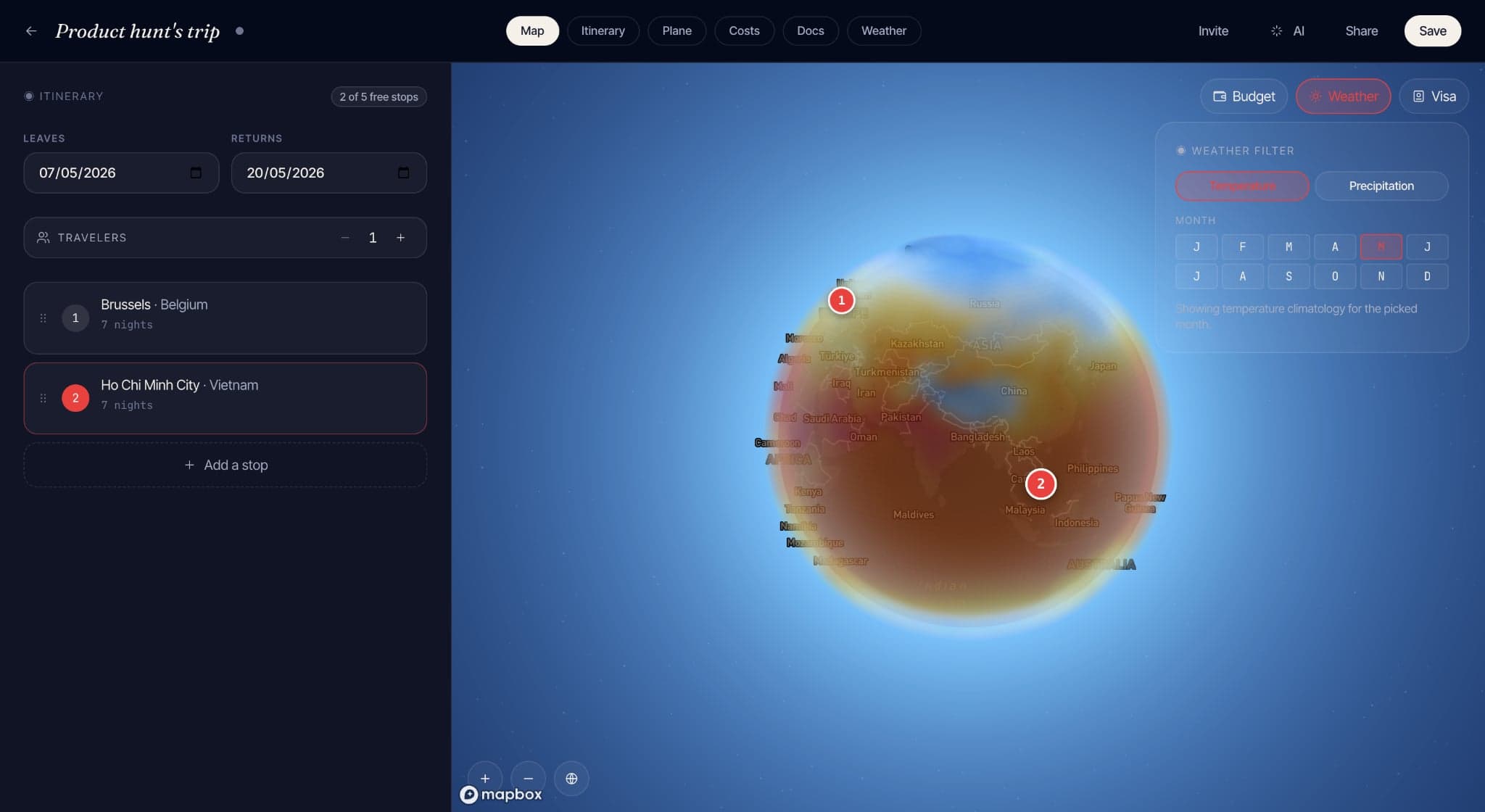
The AI planner
A built-in AI planner takes a vague intent ("ten days, $1500, warm weather") and assembles a full multi-stop itinerary you can save, share, and edit. It composes around the four data layers, so suggestions are never blocked by visa rules or off-season weather.
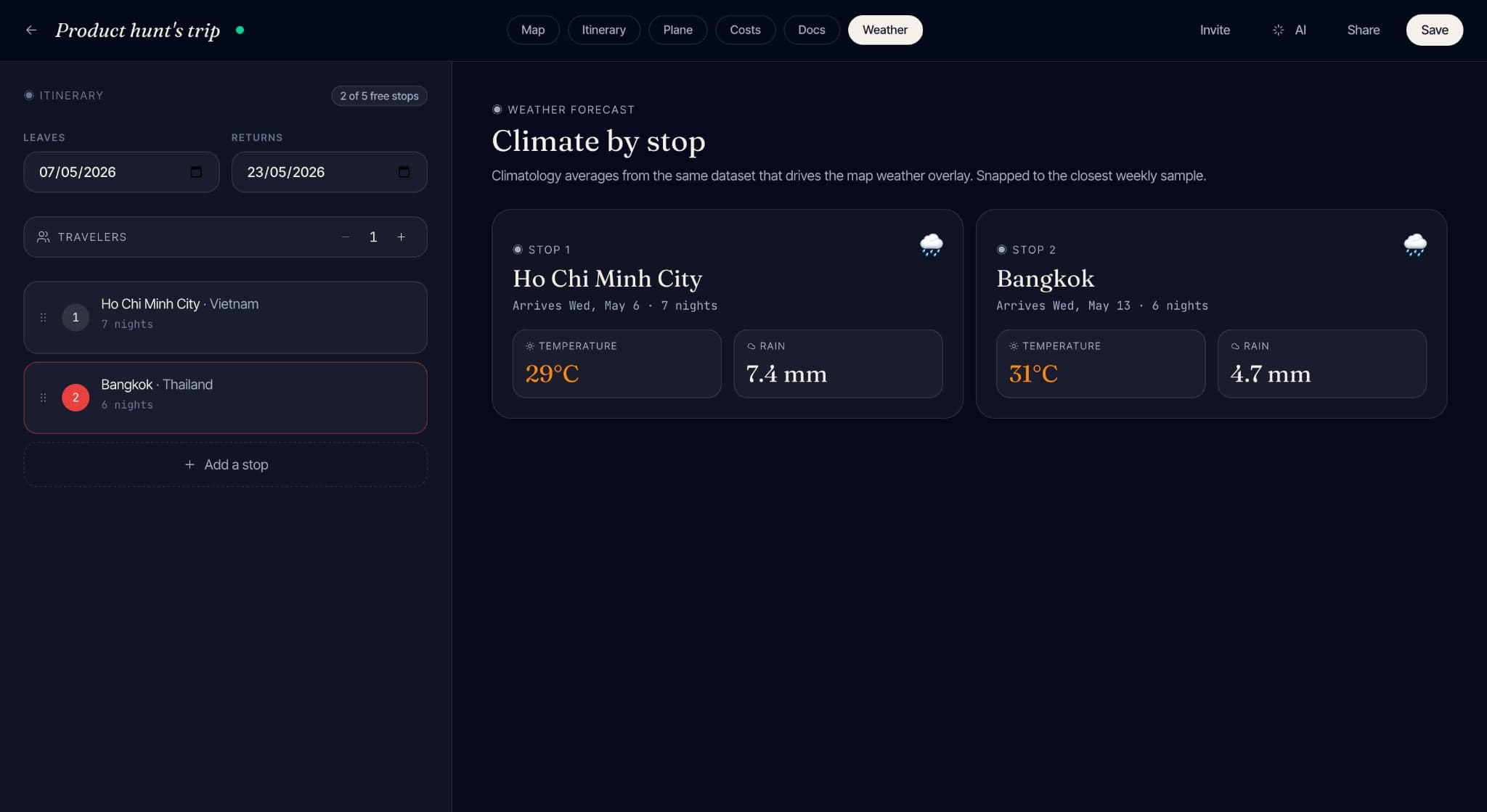
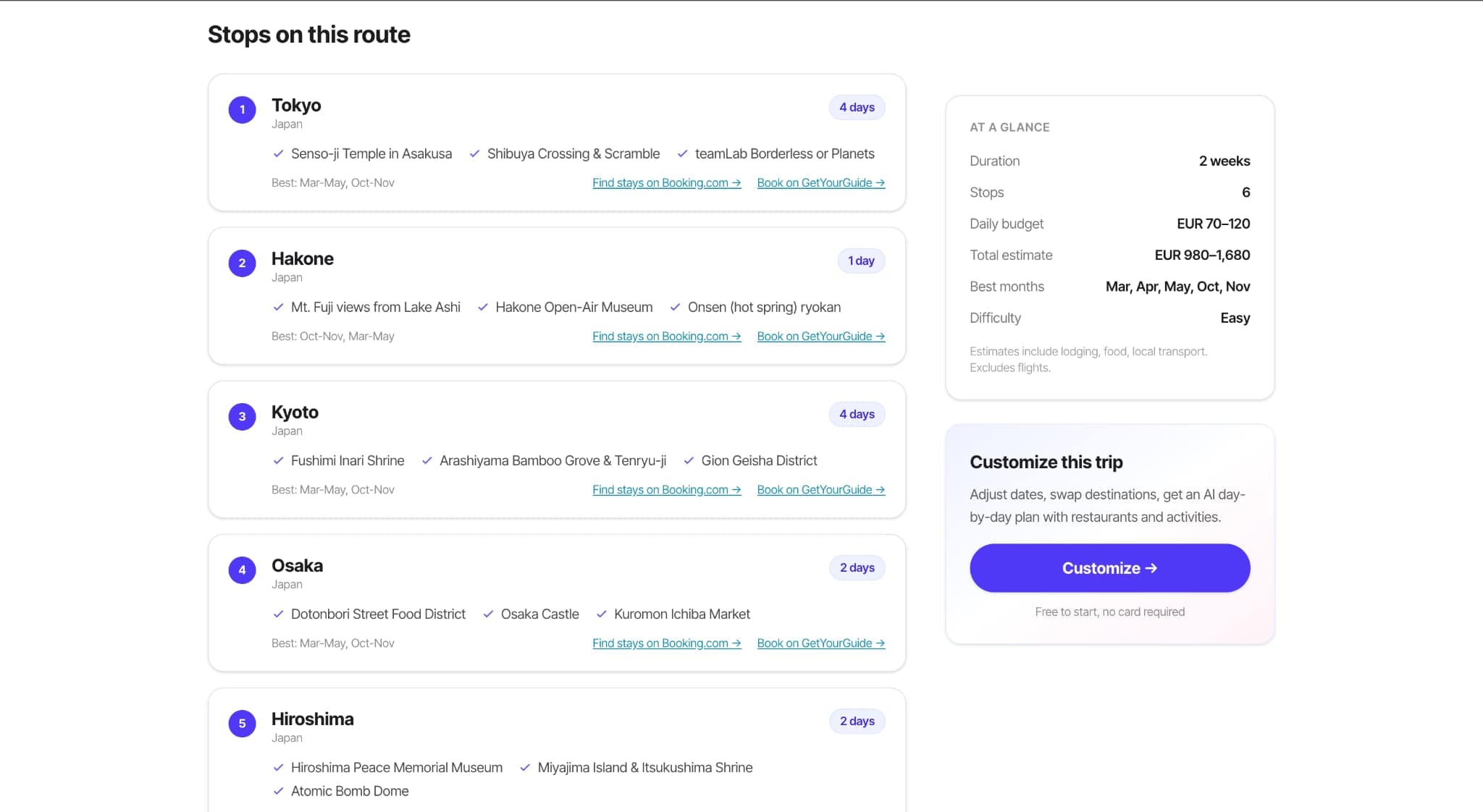
For travelers who'd rather start from a shortlist than a blank canvas, curated trip templates cover the most common shapes. "Two weeks, $1500, warm", one click, a working itinerary.
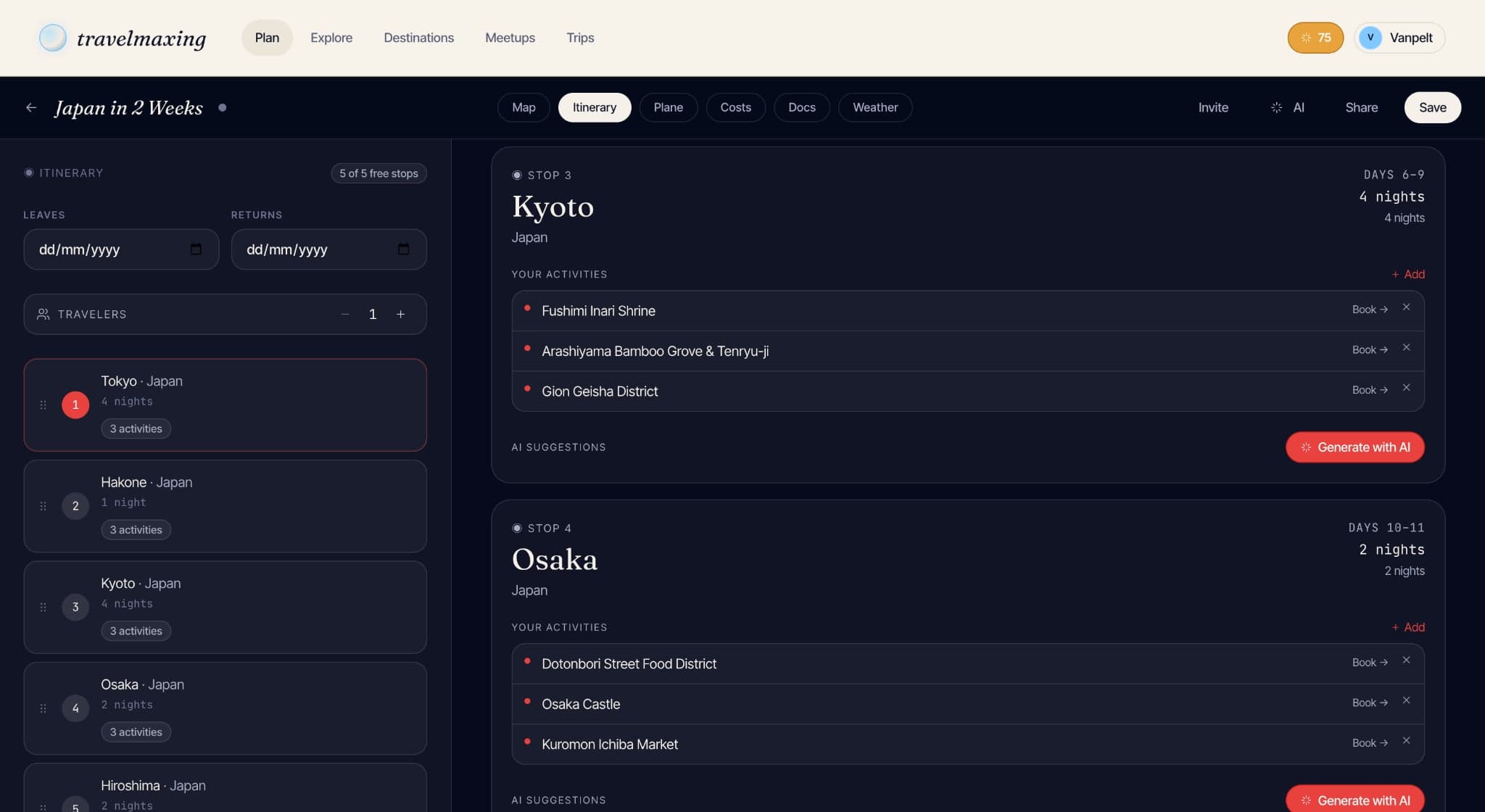
Each stop carries through to local activities, with bookable experiences and links to ground-level operators.
How it's built
- Front-end. Next.js, deployed on the edge.
- Map. Mapbox GL JS, with country-level styling driven by per-country budget and visa data.
- Data pipeline. cost-of-living, visa, and weather datasets normalised into a single per-country object, so any filter becomes a one-line predicate against that shape.
- AI planner. a streaming endpoint that emits stops into the itinerary panel as the model works, so the user sees a trip take shape rather than watching a spinner.
Why it exists
The travel-booking space has been stuck in the same paradigm for fifteen years: long forms, ranked lists, hidden fees. The hypothesis behind Travelmaxing is simple: collapse the planning surface to a map, lead with the budget constraint, and let geography do the work.
It's free, with no upsells. Some outbound booking links are affiliate (Booking.com, Aviasales, GetYourGuide): same price for you, a small commission back to keep the lights on.
Want something like this built for you?